A teaching case on the privacy gradient, cultural alignment, and the difference between a visual screen and a real refuge.
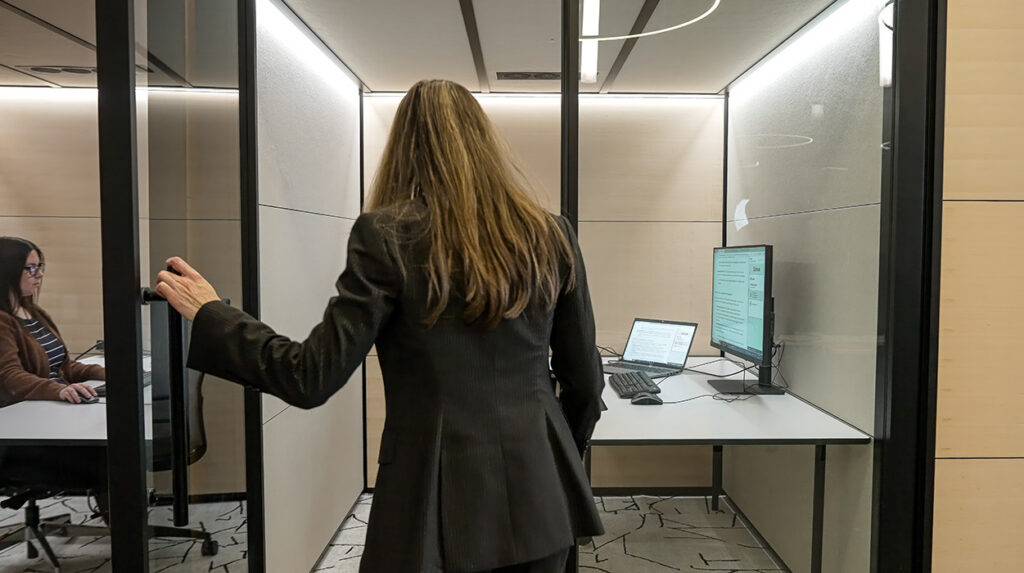
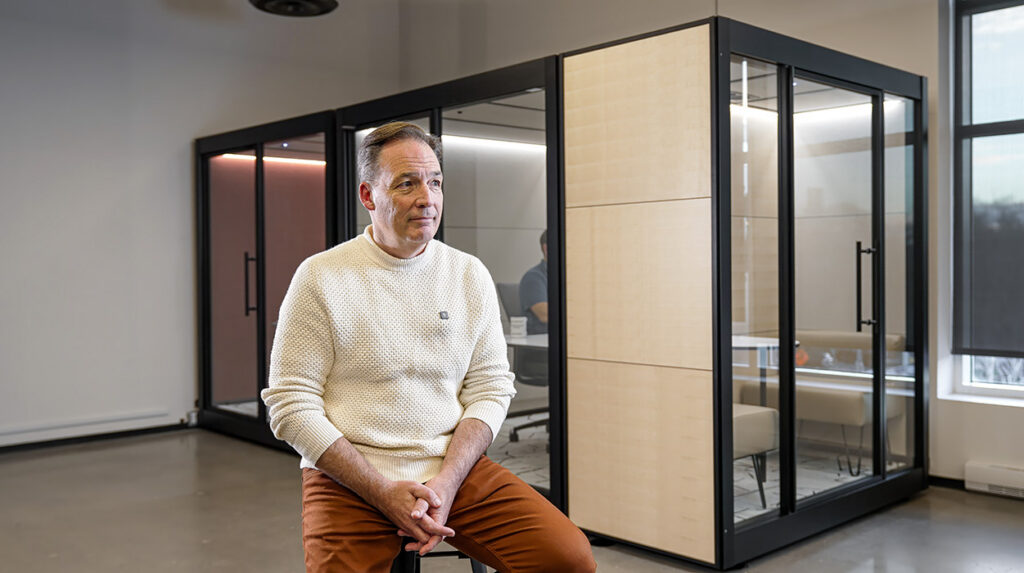
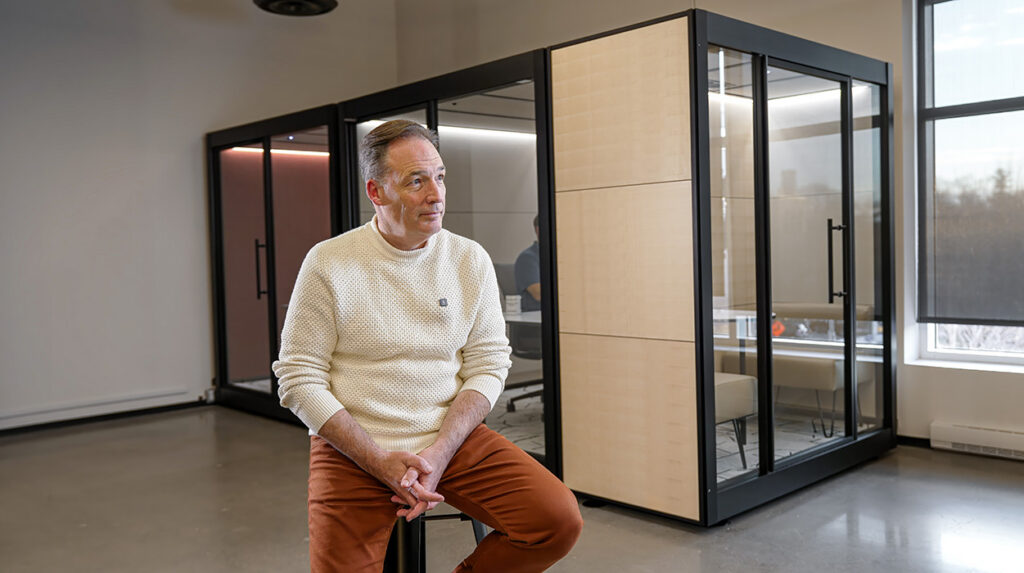
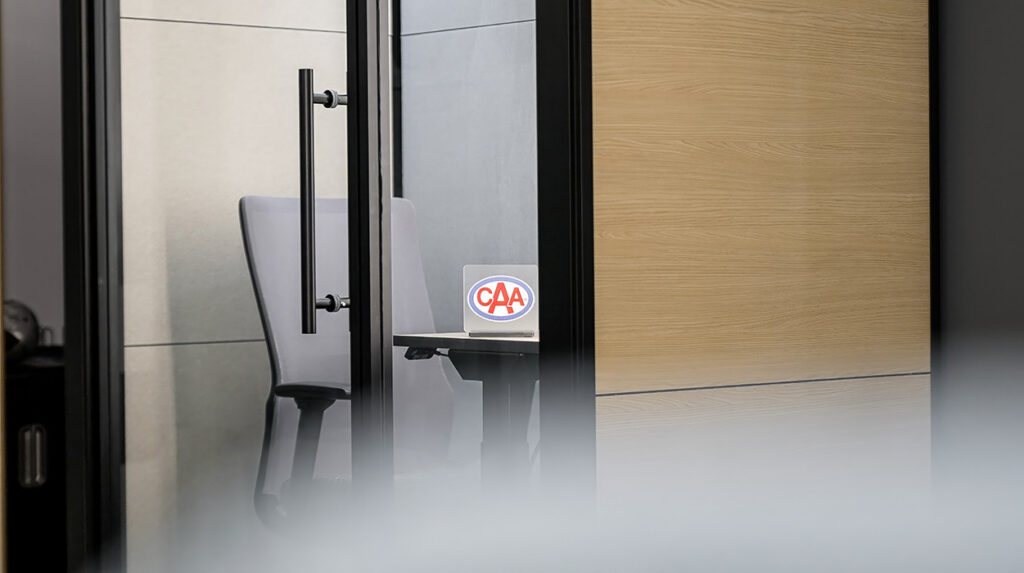
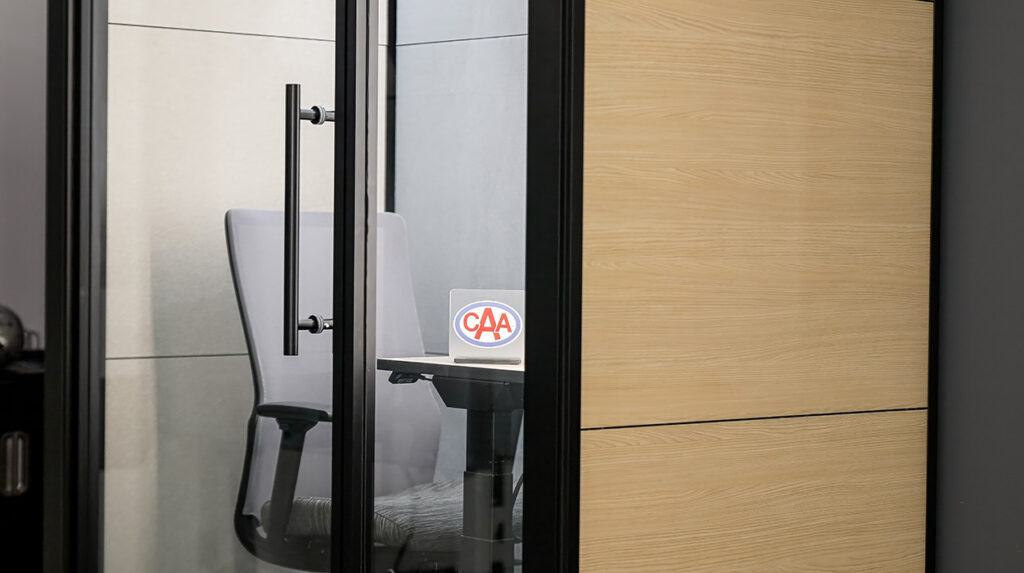
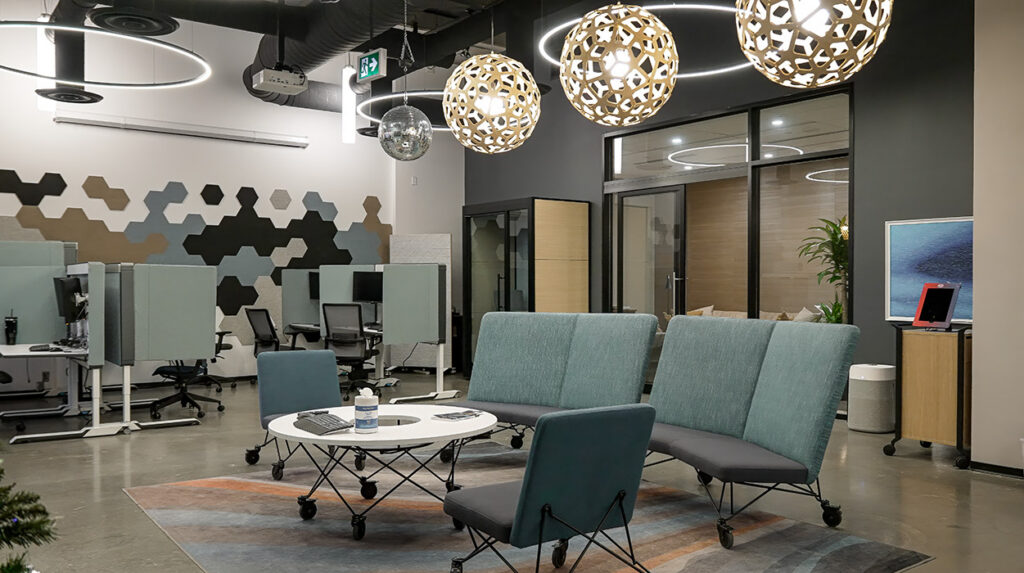
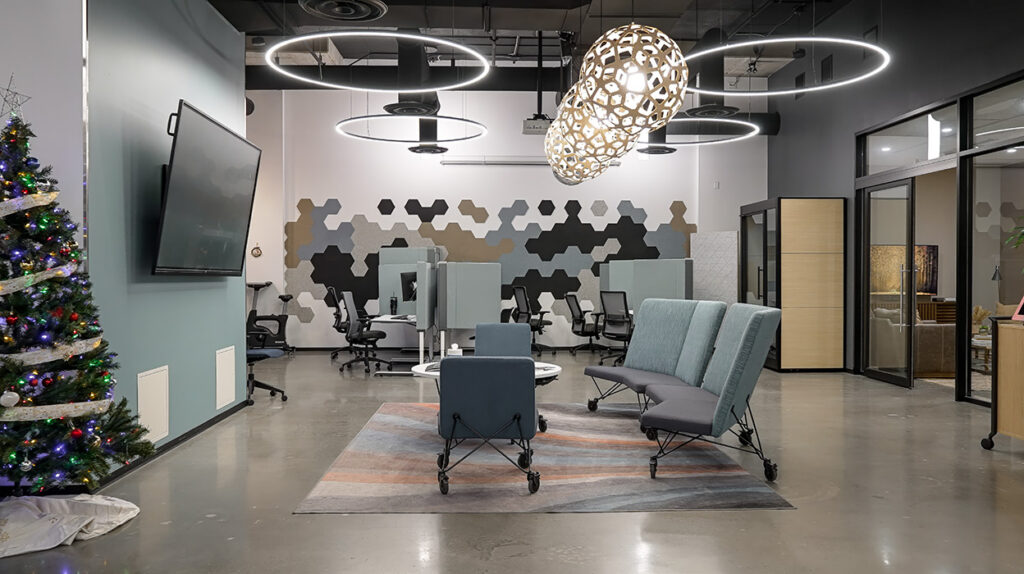
I sat with Jeff Walker, the CEO of CAA North and Eastern Ontario, on the second floor of their new Lansdowne office in Ottawa. The space looks out over the field. The downtown energy is right outside the glass. Inside, the office is open-concept, full of natural light, and threaded through with privacy pods that people actually use. Jeff told me, in his words, “all of a sudden we put the pods in, and people start sitting in them and working in them.”
The version of that story most readers have heard is the manufacturer version. Pods installed, problem solved. I want to walk through the same project from inside the conversation, because what made CAA’s office work was not the pods themselves. It was the way the team approached three specific decisions that almost every hybrid workplace is making right now, and getting wrong in places.
I should name my vantage point. I work on the manufacturer side of this conversation, and I spent time on the CAA project from early planning through post-occupancy. I have interviewed Jeff about what changed, and I have watched what the team actually does in the office now. The case below is written from inside that view.
The opening situation
CAA moved from a stoic, impersonal older office to the new Lansdowne location with a specific cultural ambition. Jeff was direct about it. He wanted CAA to be “a really interesting and intriguing place to work, hopefully with people that you like to hang out with.” The new space had to deliver on that. Open-concept layout, downtown views, modern materials, the works.
The brief looked clean on paper. The plan ran into the same problem most hybrid offices run into within the first month of move-in. People could not concentrate at their desks, the conference rooms were over-booked for one-on-one conversations, and certain areas of the floor, including a notable space under the staircase, were simply not getting used because the architecture had not given anyone a reason to go there.
The quiet problem
The thing the original plan had not solved for, in Designing Quiet terms, was the privacy gradient. CAA had two settings. Open desks, and fully enclosed meeting rooms. The middle rungs of the gradient, the work that lives between fully exposed and fully scheduled, had nowhere to land.
Before the pods went in, the company had tried carrels. Visual partitions, no enclosure. They almost never got used. That outcome is worth pausing on, because it tells you something about how privacy actually works. A carrel offers visual privacy from one direction. It offers no refuge. The body knows the difference. The workers knew the difference. The carrels stayed empty.
The cultural problem ran in parallel. Jeff described the old office as cold. The new space had been designed to feel warm. Any acoustic intervention that read as office furniture, beige, generic, industrial, was going to undo the cultural project the rest of the building was trying to accomplish.
The decisions
Three decision points are worth naming because every hybrid workplace is making versions of all three.
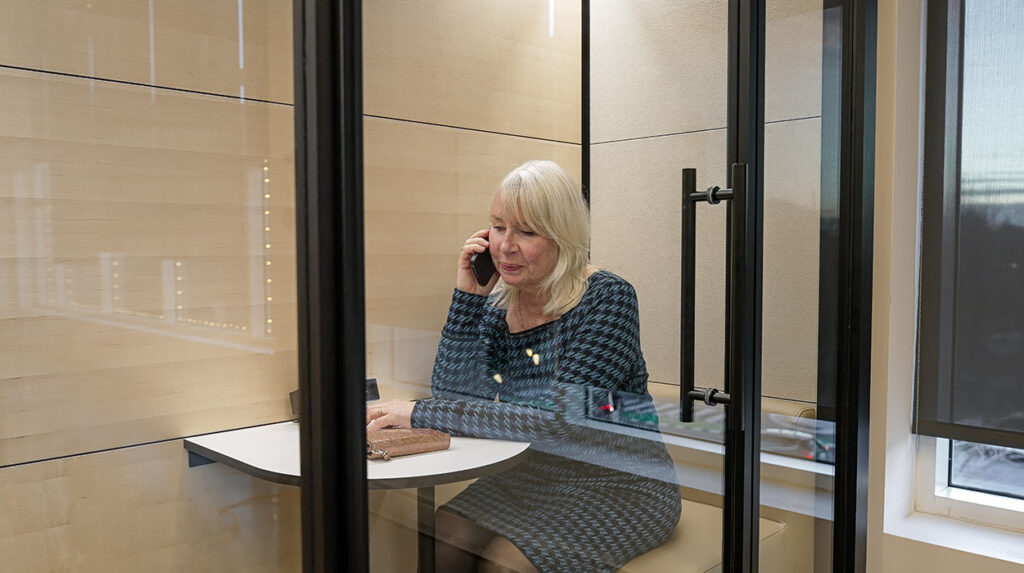
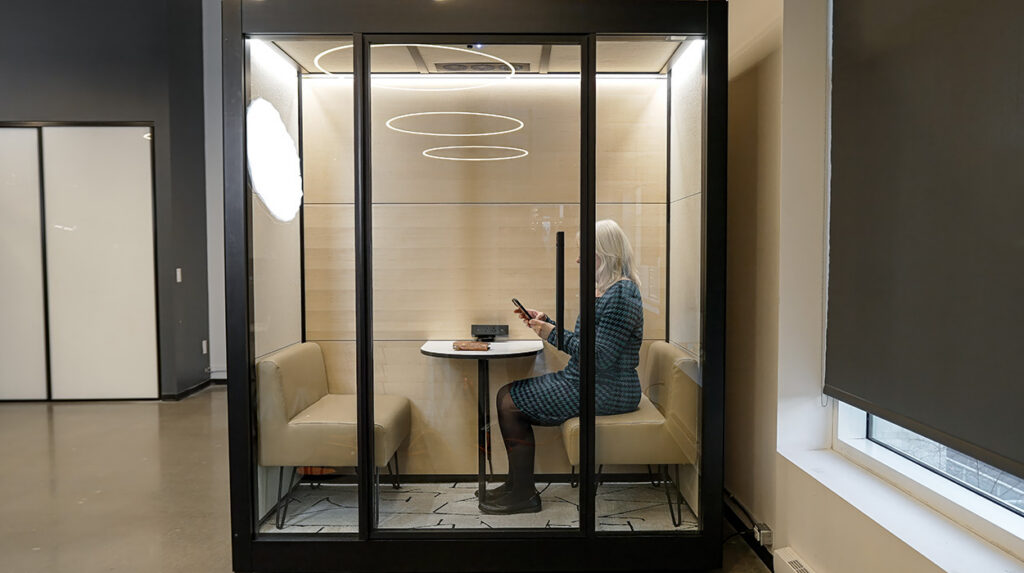
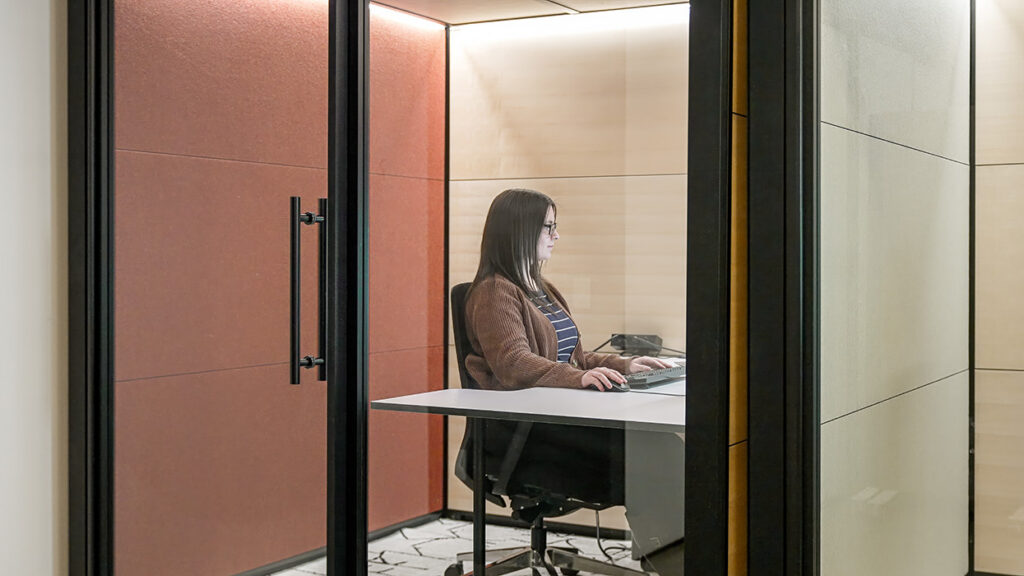
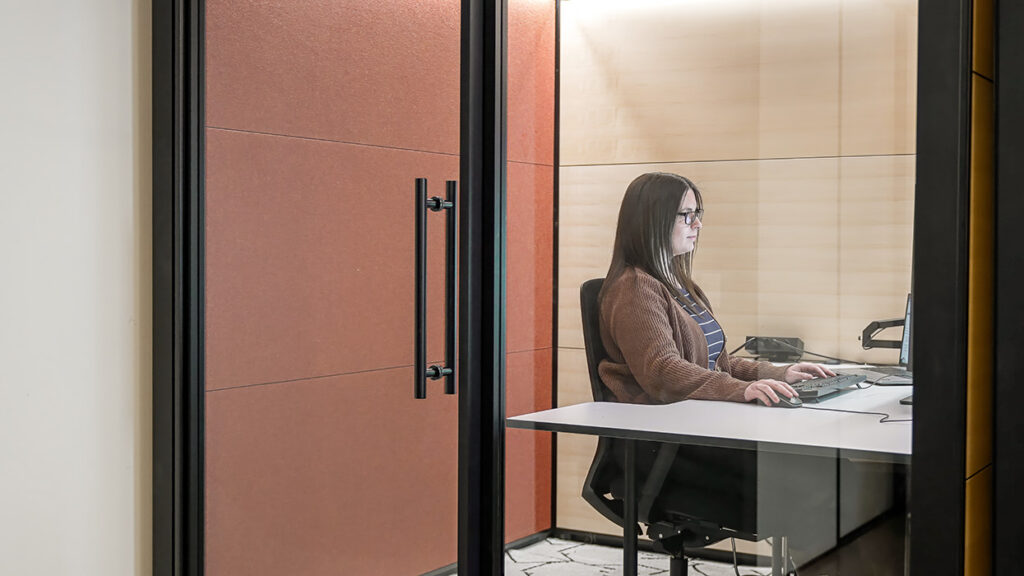
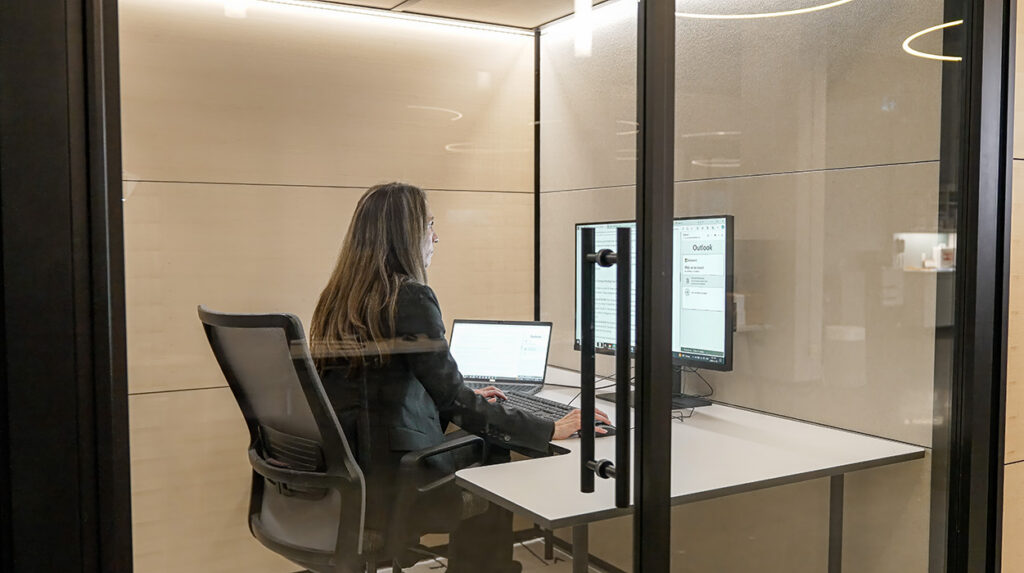
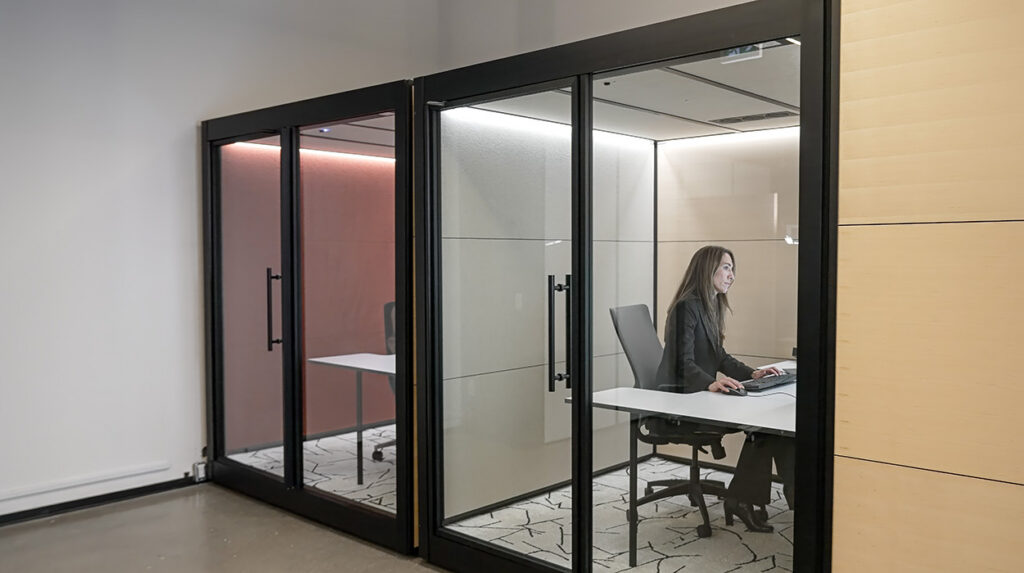
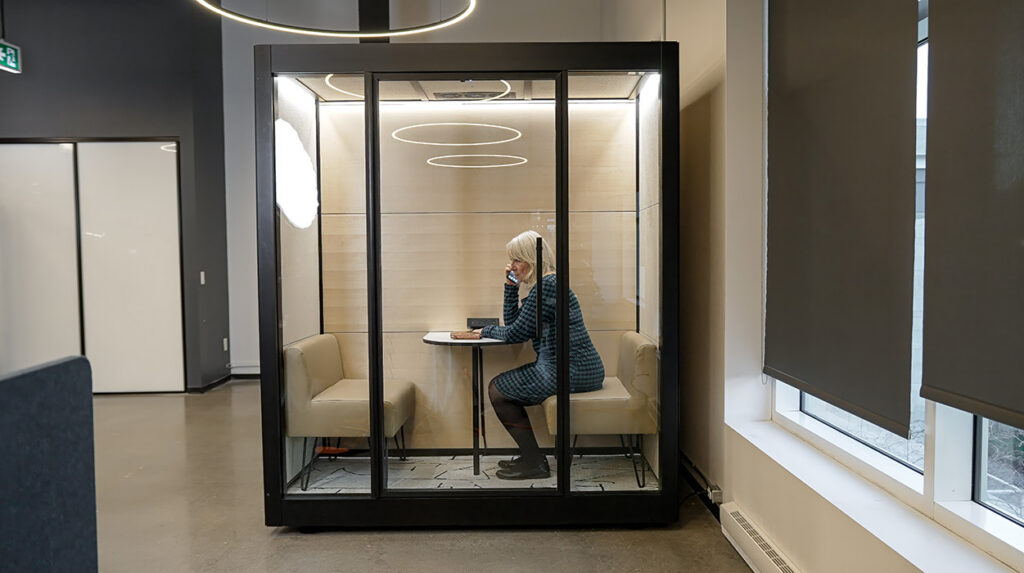
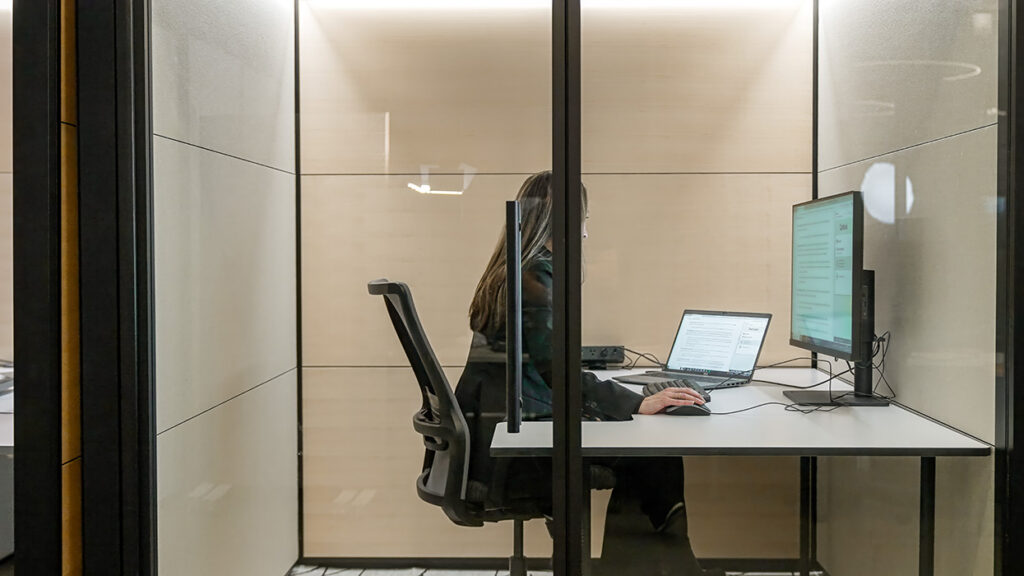
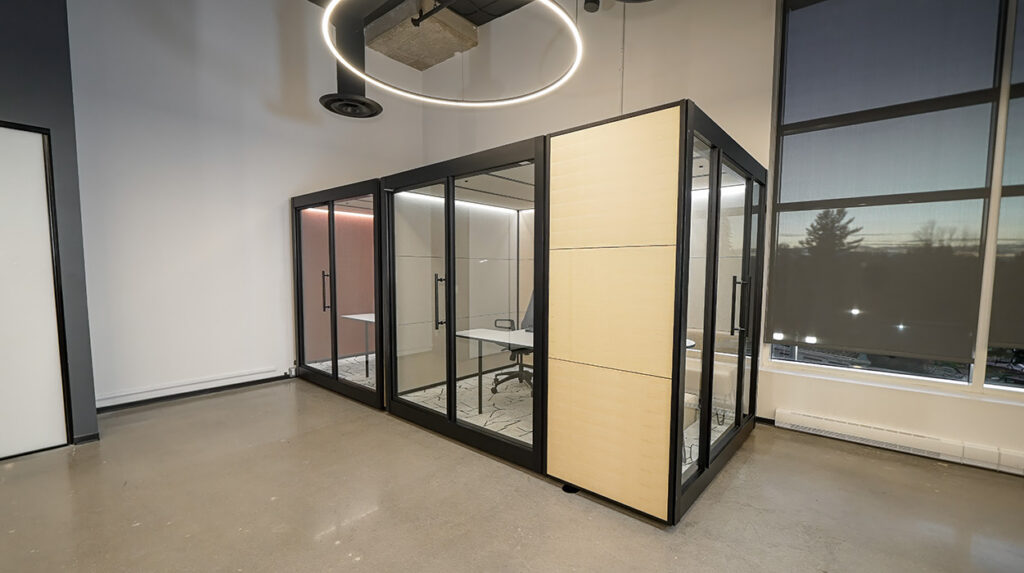
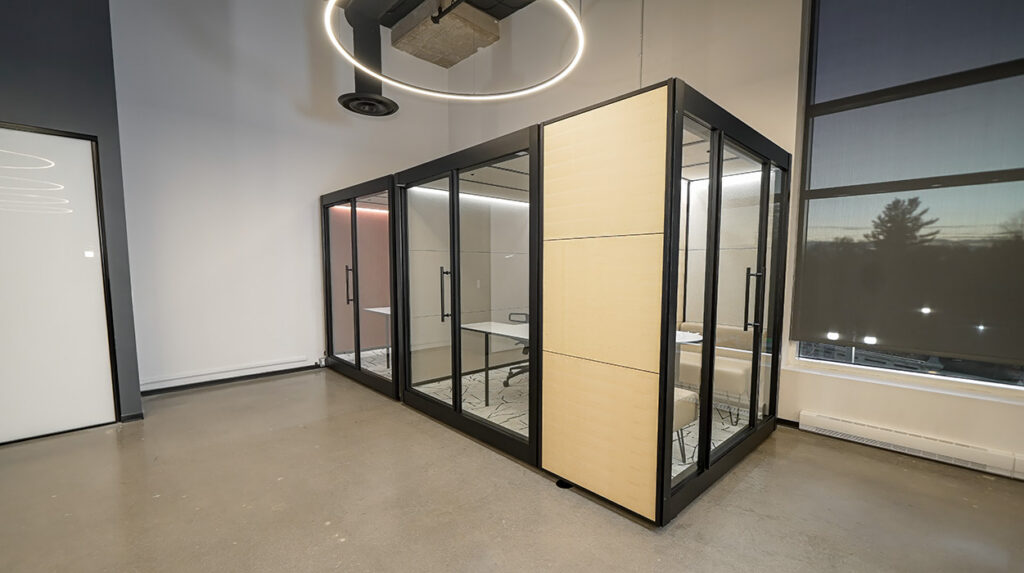
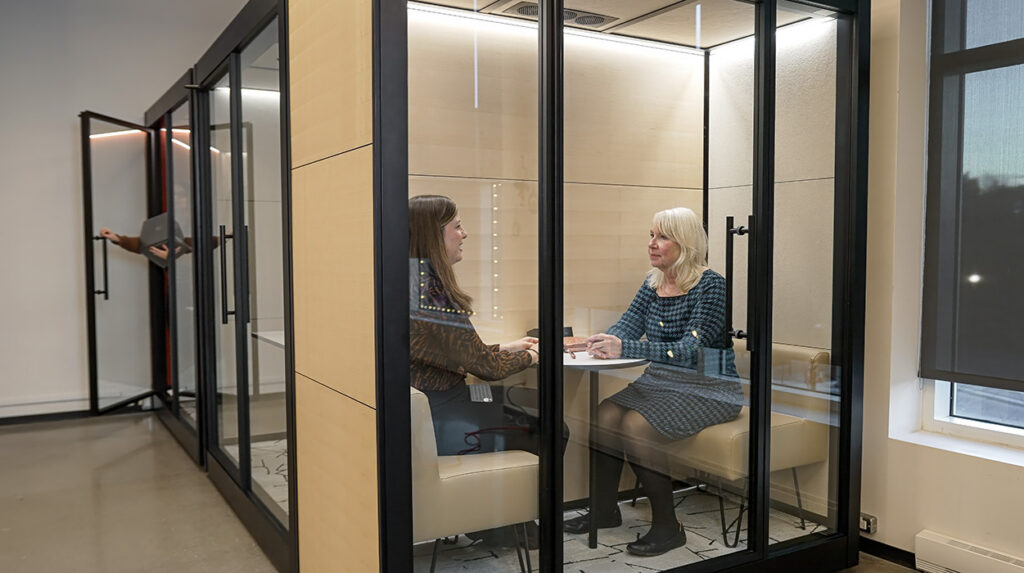
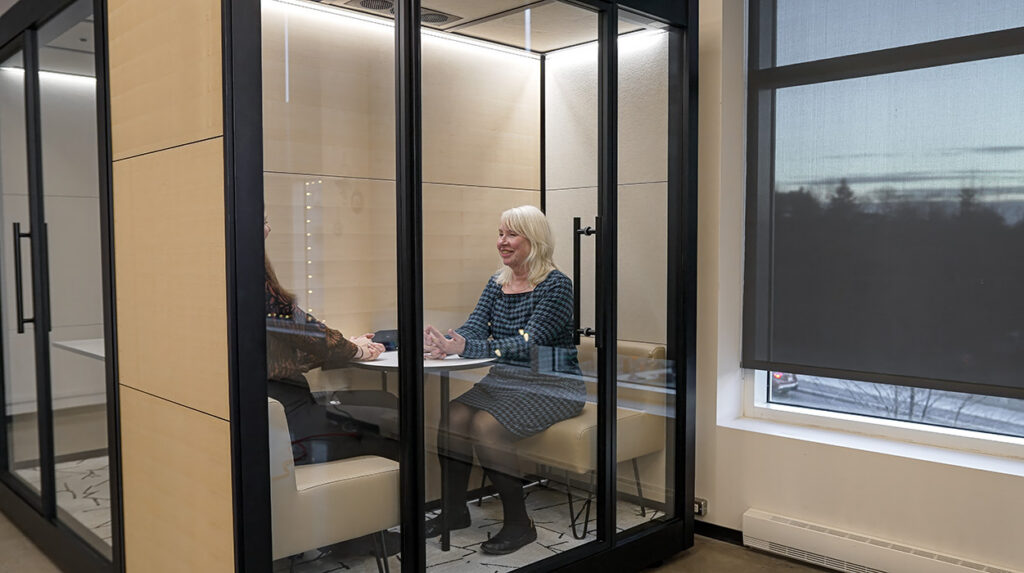
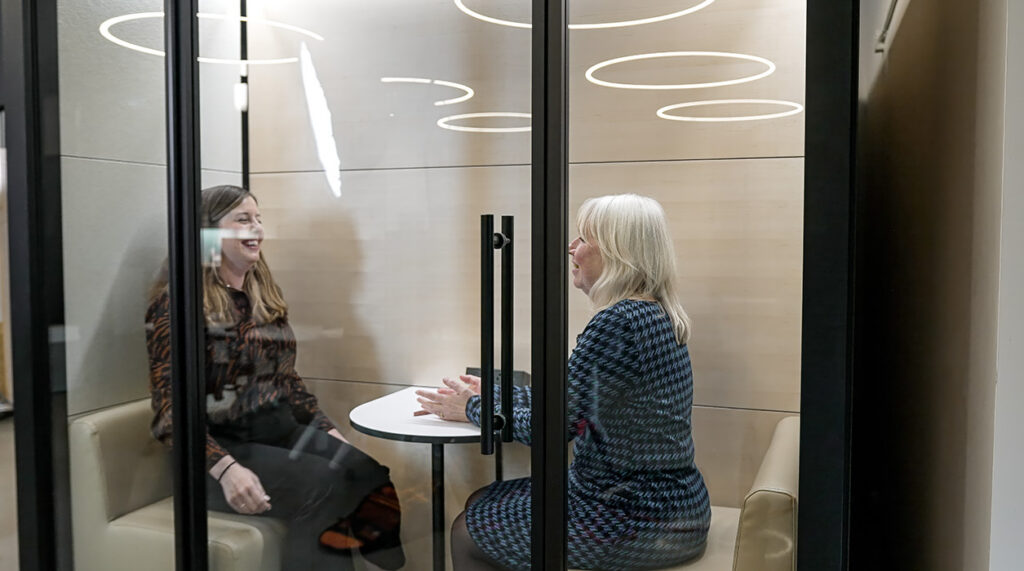
The first was choosing full enclosure over visual screening. The team replaced the failed carrels with single-person and two-person pods that closed completely. The acoustic performance mattered. The refuge mattered more. The minute the workers had a place to close a door, the territory the carrels had occupied became the most-used space on the floor.
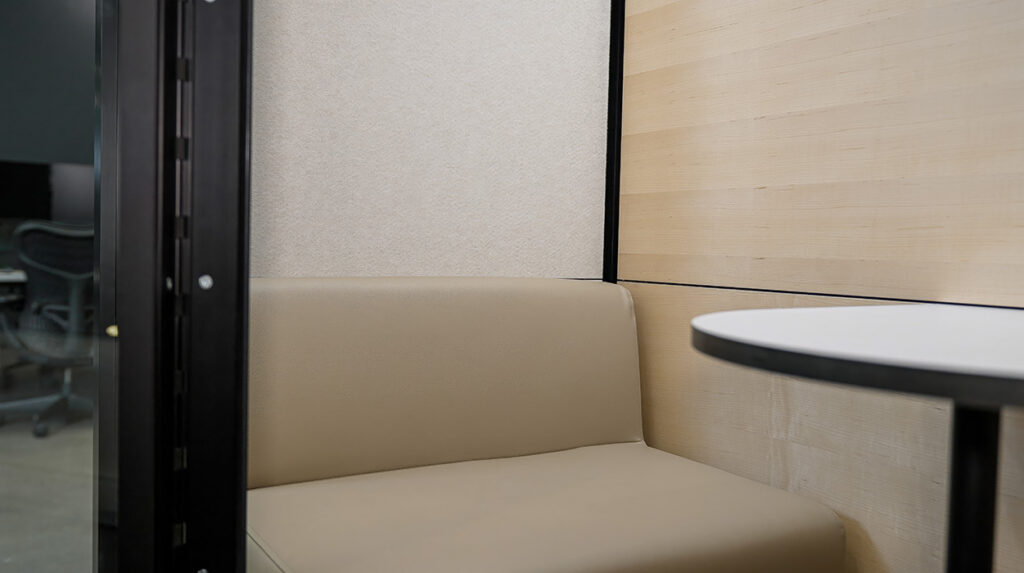
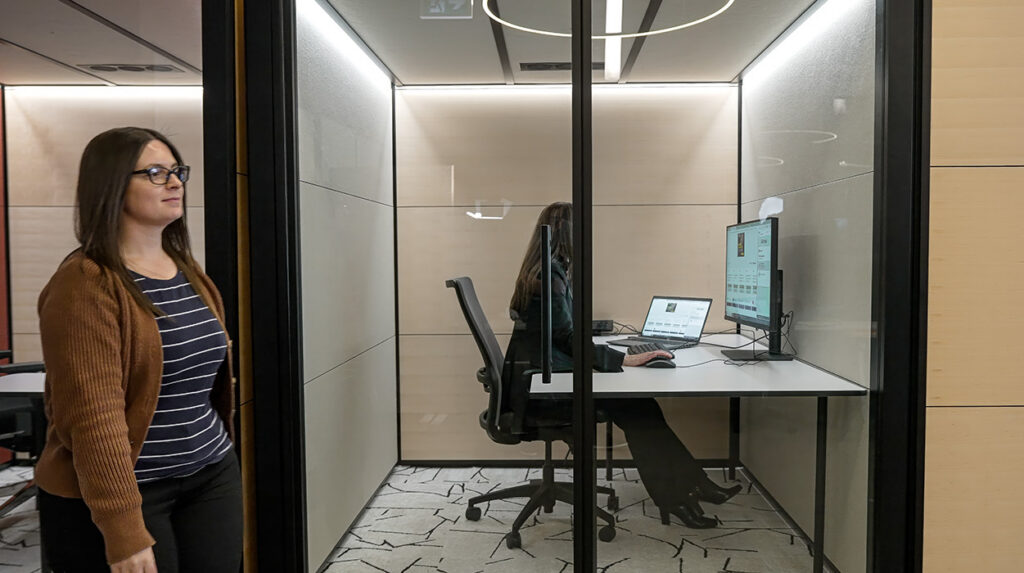
The second was treating the under-staircase space as a programming opportunity, not a leftover. Awkward floor plan moments are usually treated as dead space. The CAA team specified a custom-height pod that fit precisely into the volume under the staircase. That single decision turned a piece of overlooked floor into one of the more popular spots in the office. The lesson there has very little to do with pods. The lesson is that floor plate efficiency in the open era is mostly about what you do with the volumes the original architect did not know what to do with.
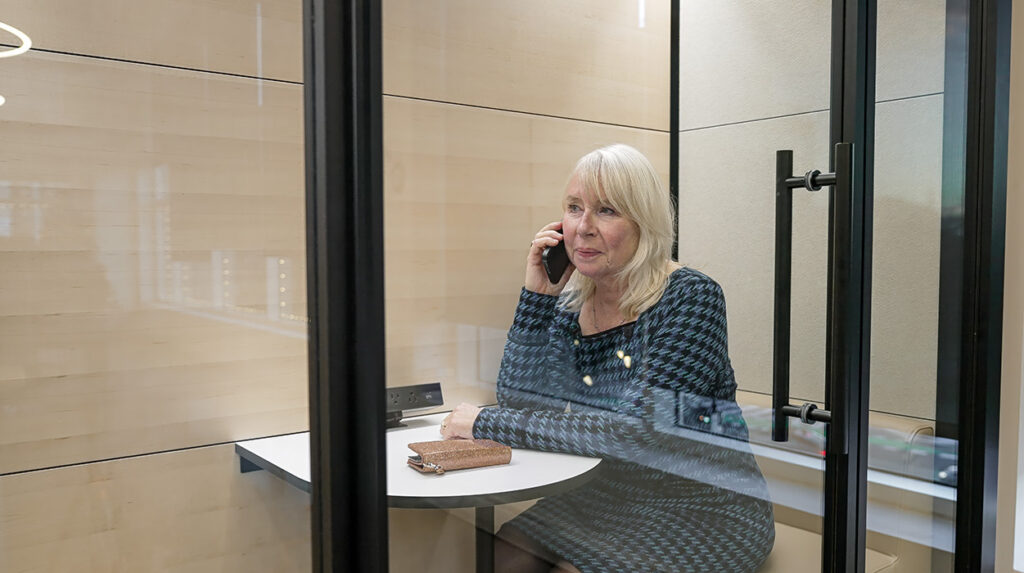
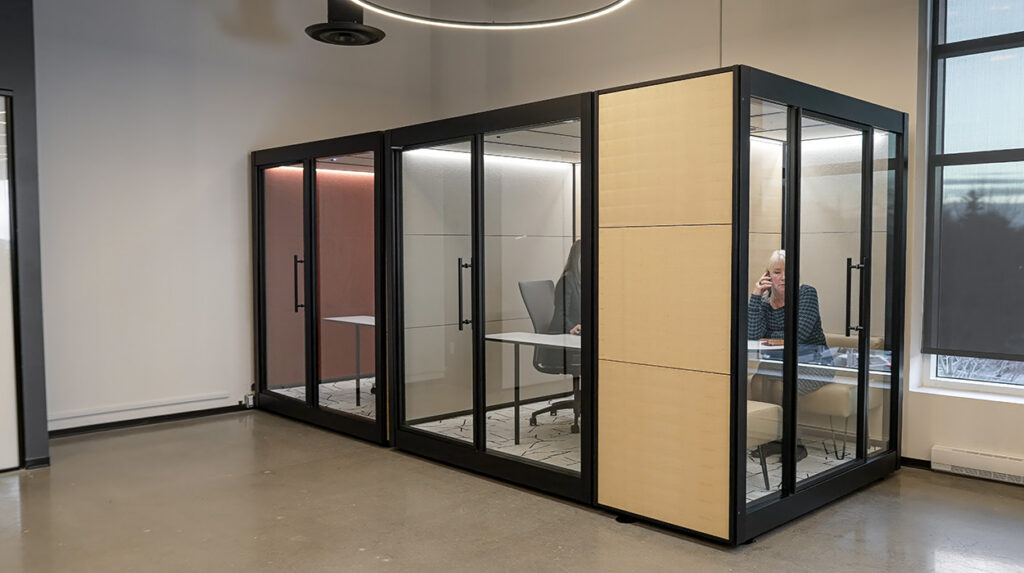
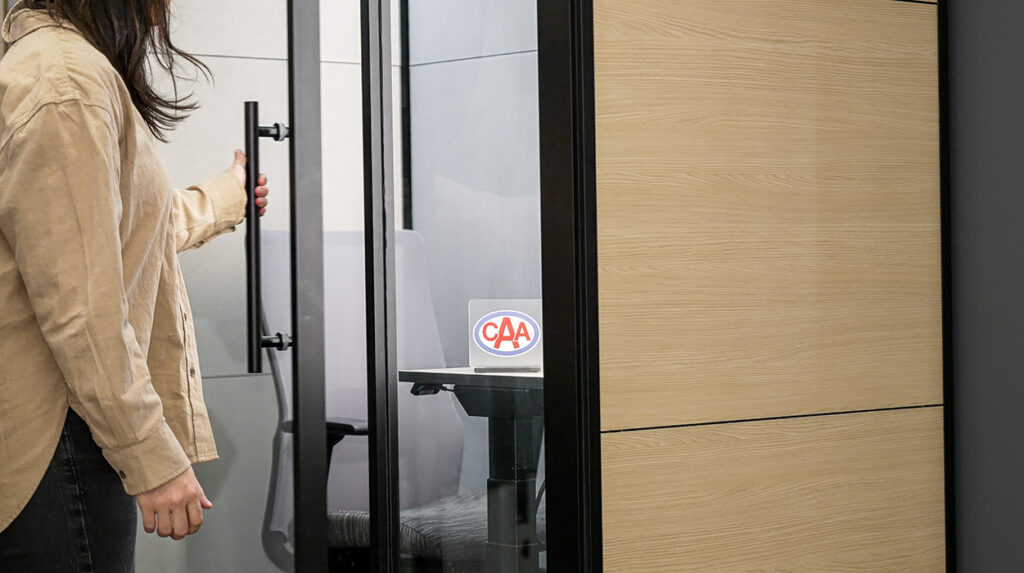
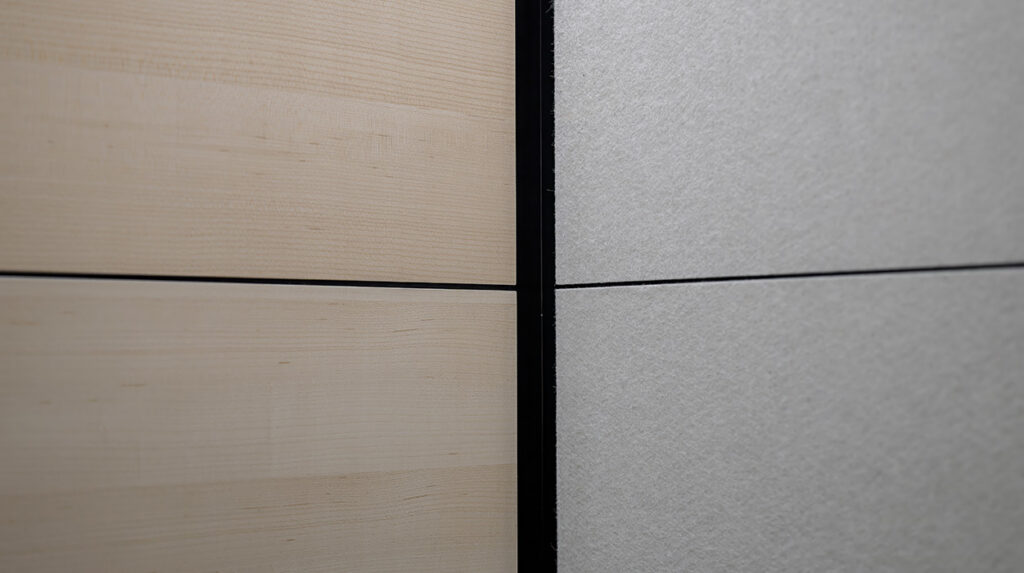
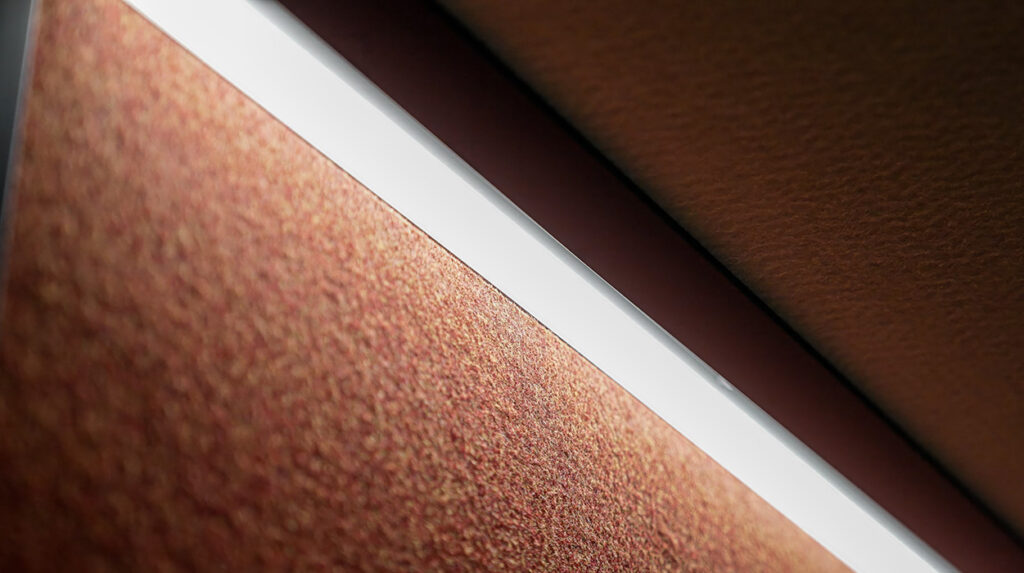
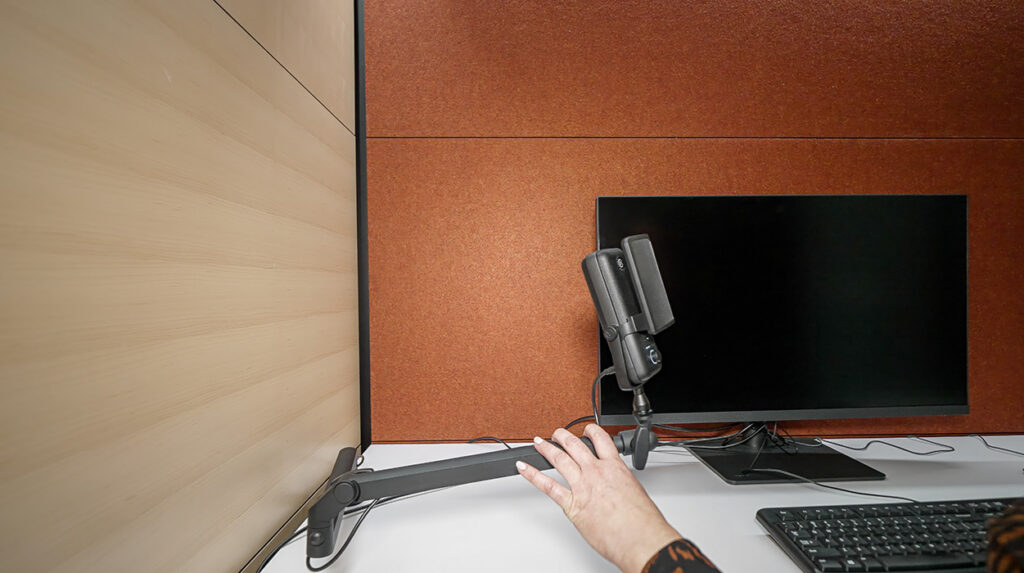
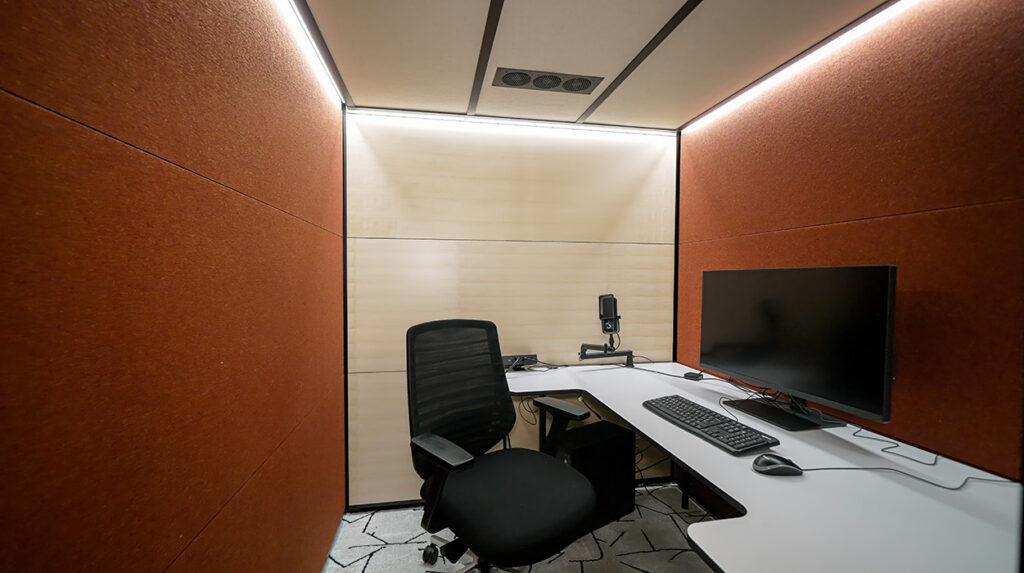
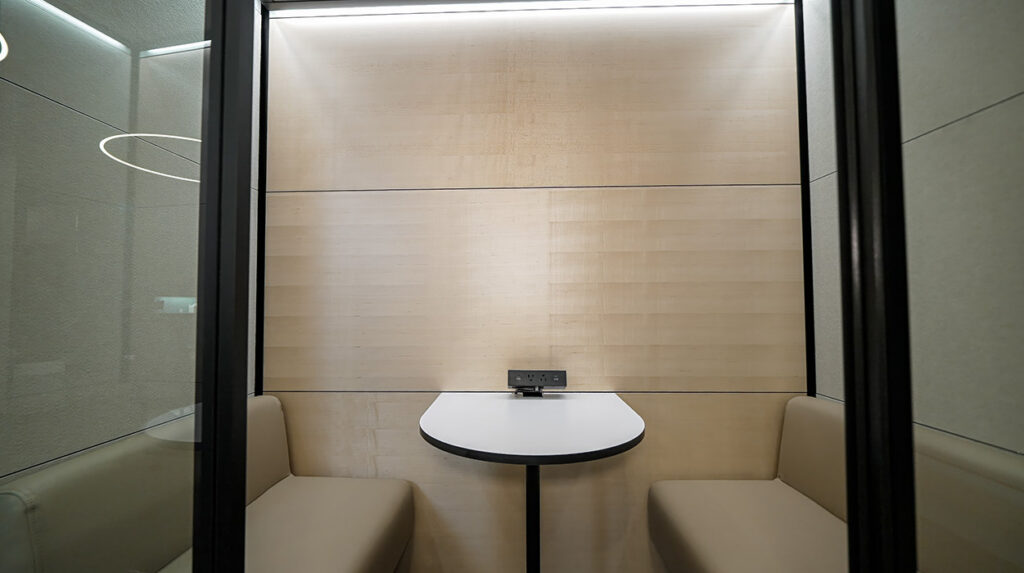
The third was the finish package. Real wood veneer, residential-feeling carpet, custom privacy glass, acoustic felt accents. None of those decisions improved the acoustic performance of the pods. All of them made the pods readable as part of the building, not as an intrusion into it. Jeff named the value of this directly. “The model was very flexible, so we could have it look and feel very similar to the rest of the place.” The reason that matters is that an acoustic intervention which feels alien gets used less. The cultural finish is doing acoustic work in disguise.
What it looks like in use
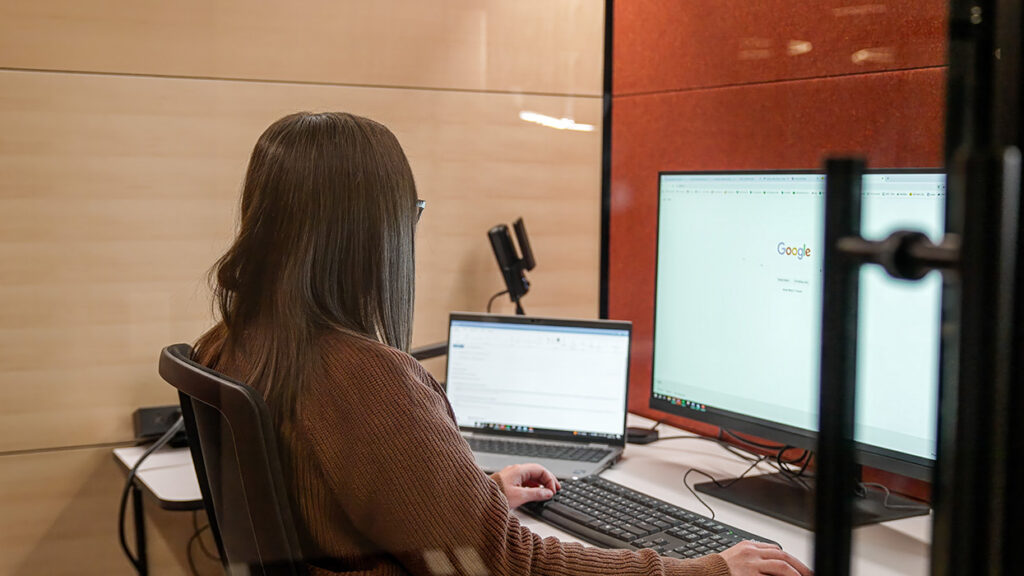
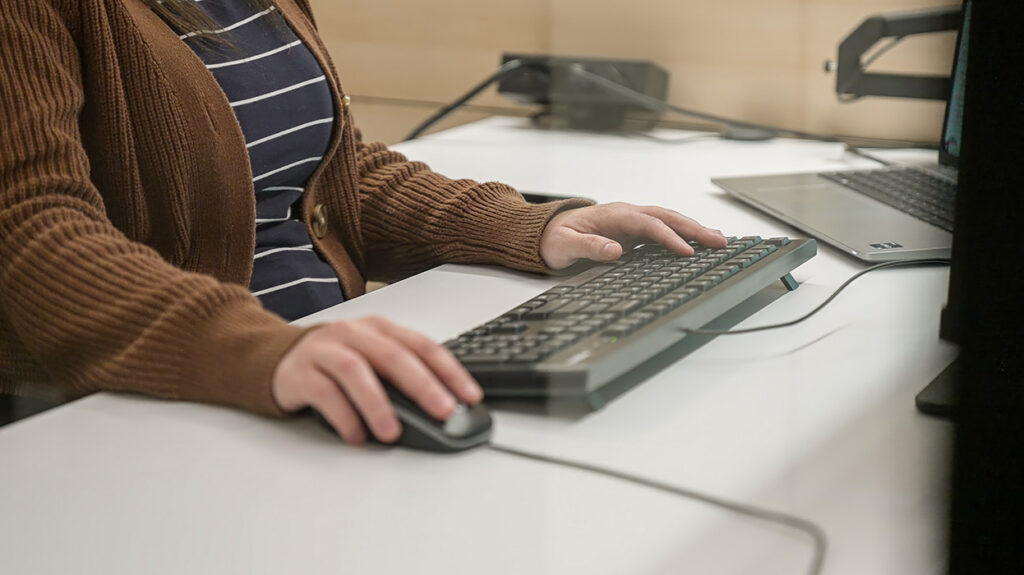
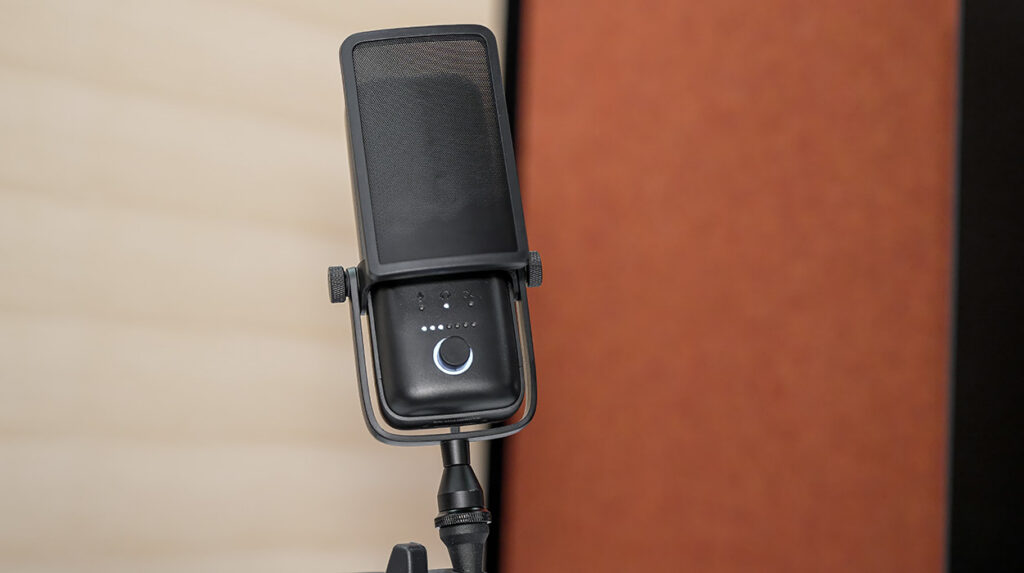
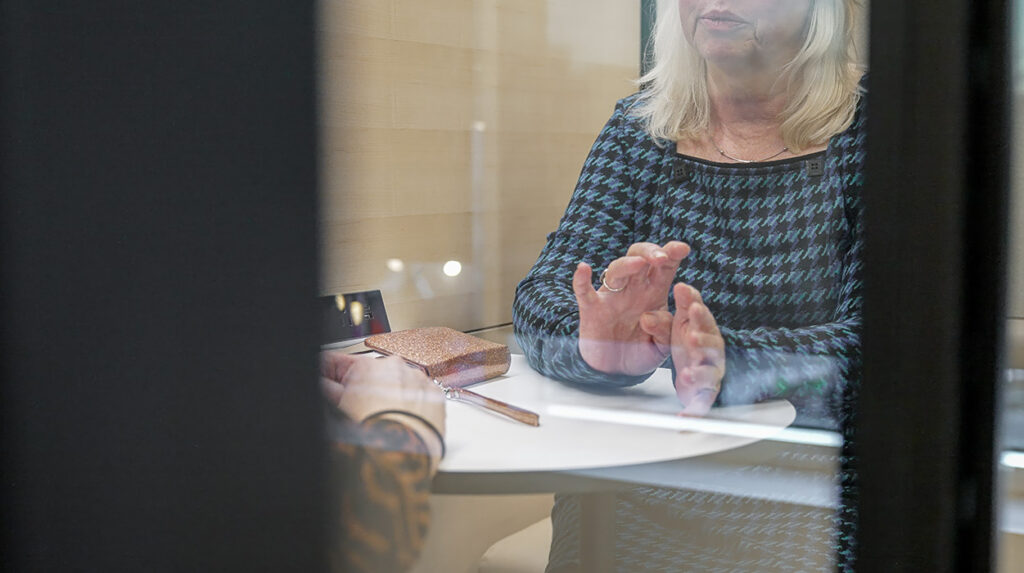
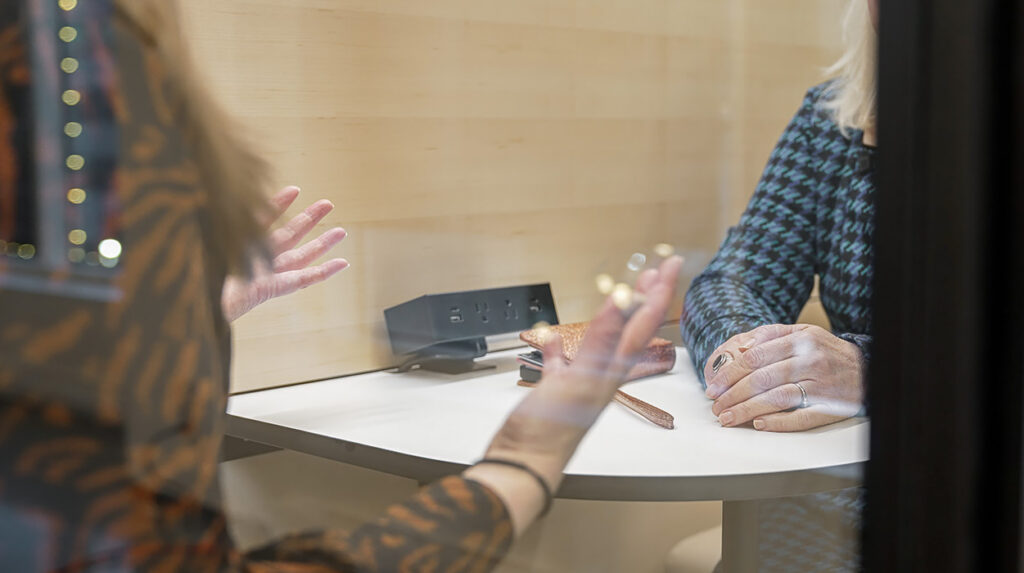
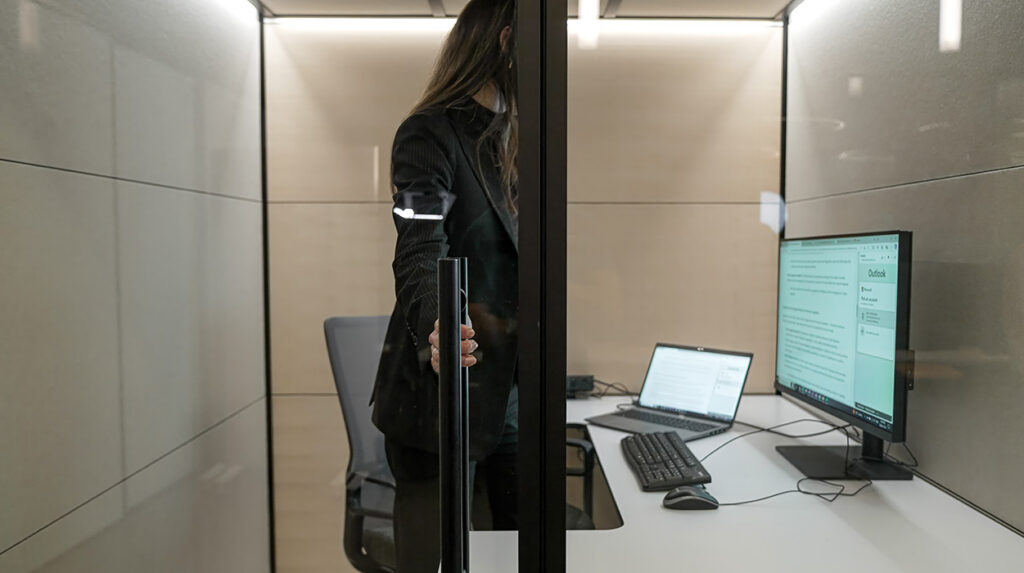
The most useful thing I observed in the months after install is how the pods get used across a workday. The single-person pod doubles as a podcast studio in the afternoon. The two-person hosts the one-on-ones that used to spill into the open floor. The six-person holds the meetings that previously over-flowed into the only conference room. The office pod under the staircase became the place people go for a focused stretch when the open floor is loud.
The other observation worth carrying out of this project is that the conversation about pods at CAA stopped being about pods within about six weeks of install. It became a conversation about how teams work. The pods receded into the architecture. The work they protected came forward. That is the test of a successful acoustic intervention, and it is the test that office furniture rarely passes.
The portable lesson
The thing I would carry into your next project is this. When a hybrid office is not working, the diagnosis usually lives in the missing middle of the privacy gradient, not in the extremes. The open desks are not the problem. The conference rooms are not the problem. The problem is that the work that lives in between has nowhere to go, and the people doing it know it.
CAA’s office works because the team treated the acoustic question and the cultural question as the same question. The pods had to perform acoustically, and they had to read as warm. Either one without the other would have produced a half-solved building. Both together produced a floor people actually want to be on. That is not a furniture story. That is a programming story, and it is portable to any project where the brief is asking for collaboration and concentration in the same room.

![Woman in a dark blazer stands inside a glass privacy pod, reaching for the door handle beside a white desk with a laptop and monitor.]','](https://carlabostock.com/wp-content/uploads/2026/06/SnapCab_CAACase-16_web-1024x575.jpg)