A teaching case from the Space to Be You design contest. On what emerging designers see in the pod brief that the rest of the category does not.
A few years ago I started a design contest called the Space to Be You Design Contest. The brief was simple. Reimagine the workspace pod. The audience was designer professionals. The winning design each year would be built and unveiled at NeoCon, the commercial interiors trade show in Chicago, which for most of these designers would be their first time seeing their work installed at scale in front of the industry.
The contest was to give designers a pod where no possibilities were off the table. Treating them as customizable micro rooms.
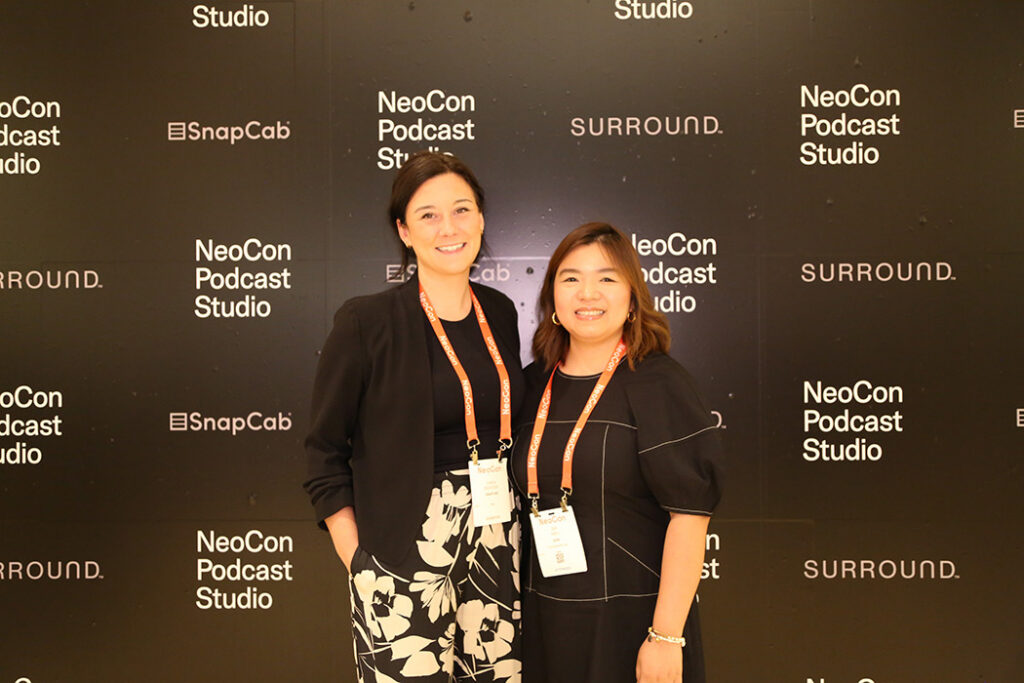
In 2024, Gia Kieu, a Bachelor of Science student in Interior Design from Georgia Southern University, won the contest with a design called the Zen Garden Pod. I worked with Gia closely through the build, from her original concept through to the unveiling at NeoCon. This case study is the version of her project I want practitioners to read, because what Gia did to the brief is worth carrying into any project where the program is asking for restoration and not just enclosure.
The opening situation
Gia’s background matters because it shaped the design. She grew up moving between Asia and the United States. Her education was in interior design with a minor in environmental sustainability. Her aesthetic instinct is rooted in Japanese garden philosophy, which has spent centuries thinking about the relationship between enclosed space and the body’s need for restoration.
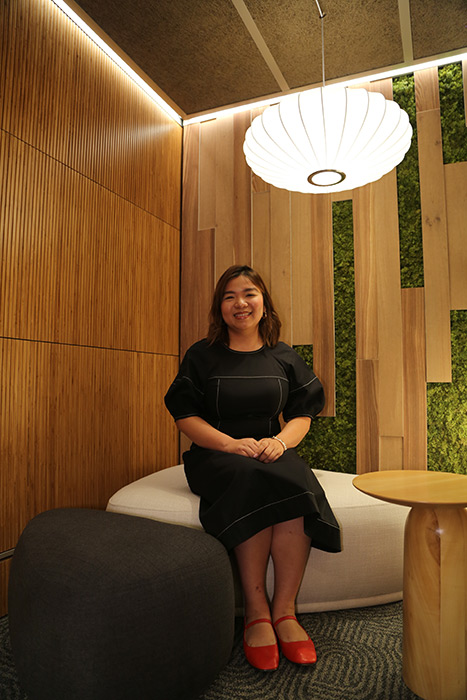
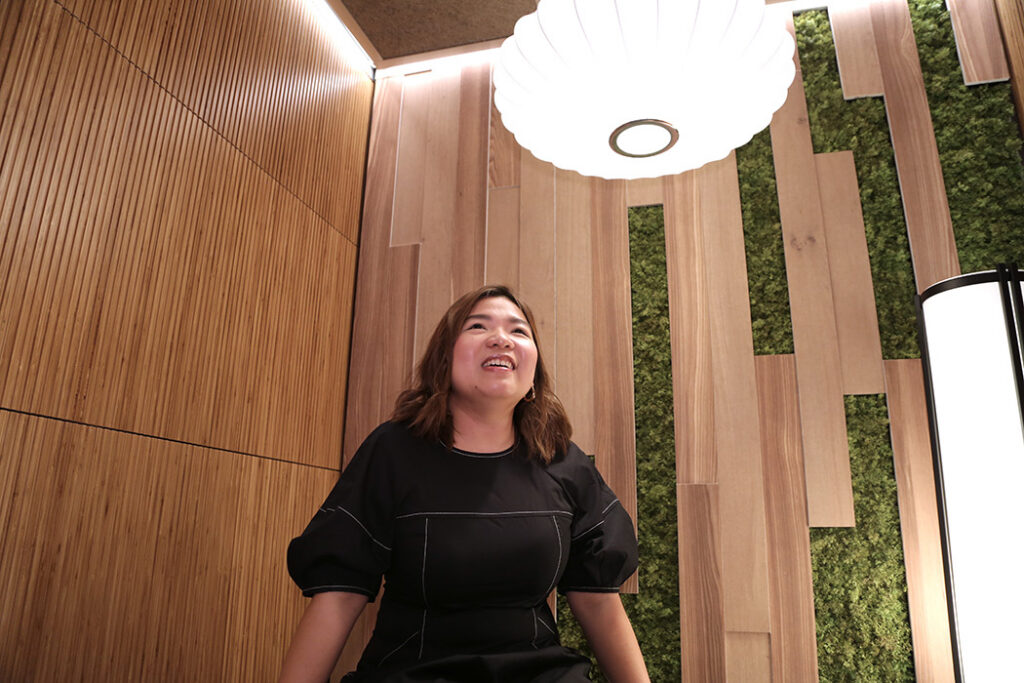
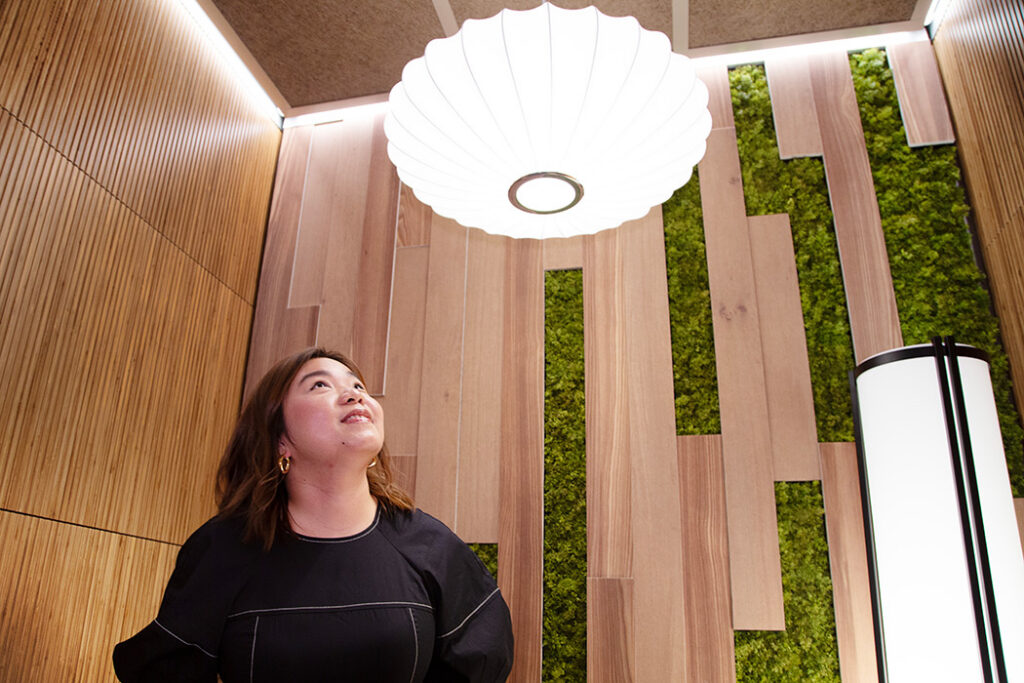
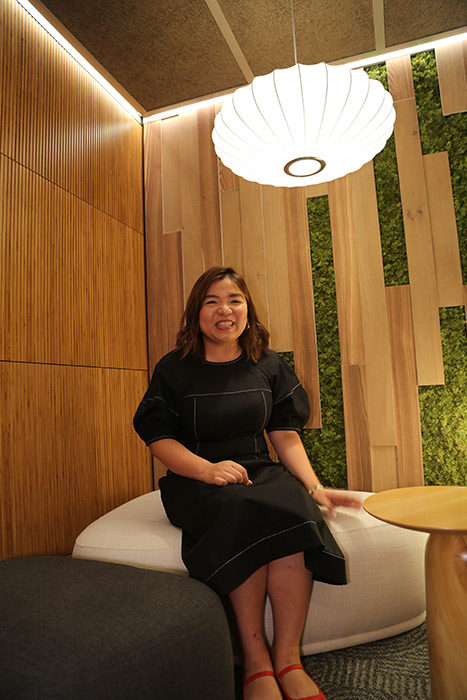
When Gia submitted the Zen Garden Pod to the contest, the design did not look like a workspace pod. It looked like a small garden. Bamboo panels. Moss texturing on the back wall. A side table that read as a piece of carved stone. A carpet pattern that evoked raked sand. The pod was clearly an enclosure. It was also clearly something else, and the something else is where the teaching lives.
The quiet problem
Most pod design in the category right now treats the pod as a productivity instrument. The brief is acoustic privacy, fast deployment, integrated tech, clean lines. The pod’s job is to give the worker a place to do focused work, and the rest of the design vocabulary follows from that. The exterior is finish. The interior is ergonomics. The point is the work.
What Gia named, by treating the pod as something other than a productivity instrument, is that the work is not always the point. A meaningful percentage of the time someone steps into a pod, the job is not to focus harder. The job is to recover. Decompression. A breath. A reset before the next meeting. The design field has a name for this kind of space. Biophilic and restorative environments have been in the architectural conversation for decades. The pod category had mostly not borrowed from that vocabulary.
The quiet problem in the broader category, in other words, is that most pods solve for one half of the workday. The half that needs to focus. The other half, the half that needs to come down before it can think clearly again, is mostly underserved by the contemporary pod brief. That gap is where Gia worked.
The decisions
A few decisions in Gia’s design are worth walking through, because they translate into specification choices any practitioner can borrow.
The first was the material palette. Bamboo wall panels from Plyboo, FSC certified and rapidly renewable. Wood Plank acoustic panels from Acoufelt with Living Building Challenge Declare labels and Red List Free certification. Envirocoustic Wood Wool ceiling tiles, Cradle to Cradle Certified, doing the room’s acoustic absorption while contributing to the visual reading of warmth. Interface carpet in a pattern called Look Both Ways, with one of the lowest carbon footprints in the commercial carpet category. The sustainability decisions were not a constraint on the design. They were the design. The same way the timber decisions are the design in a Japanese teahouse.
The second was the soft architecture. A sculptural, hand-crafted maple side table. An Asher ottoman shaped to read as a river stone. Maintenance-free moss texturing on the back wall. None of these are technical features. All of them are restorative cues for the body. Together they tell the occupant something the typical pod does not tell them, which is, you can stop here for a minute.
The third decision was the acoustic logic, and this is the part that matters most for practitioners. The Envirocoustic ceiling tiles were not chosen because they looked nice. They were chosen because Gia understood, intuitively, that the kind of refuge she was designing for required acoustic stillness, not just acoustic isolation. The brain registers the difference between a quiet enclosure and an absorbent one. The Zen Garden Pod is both, and the second one is the harder one to specify.
What it looks like in use
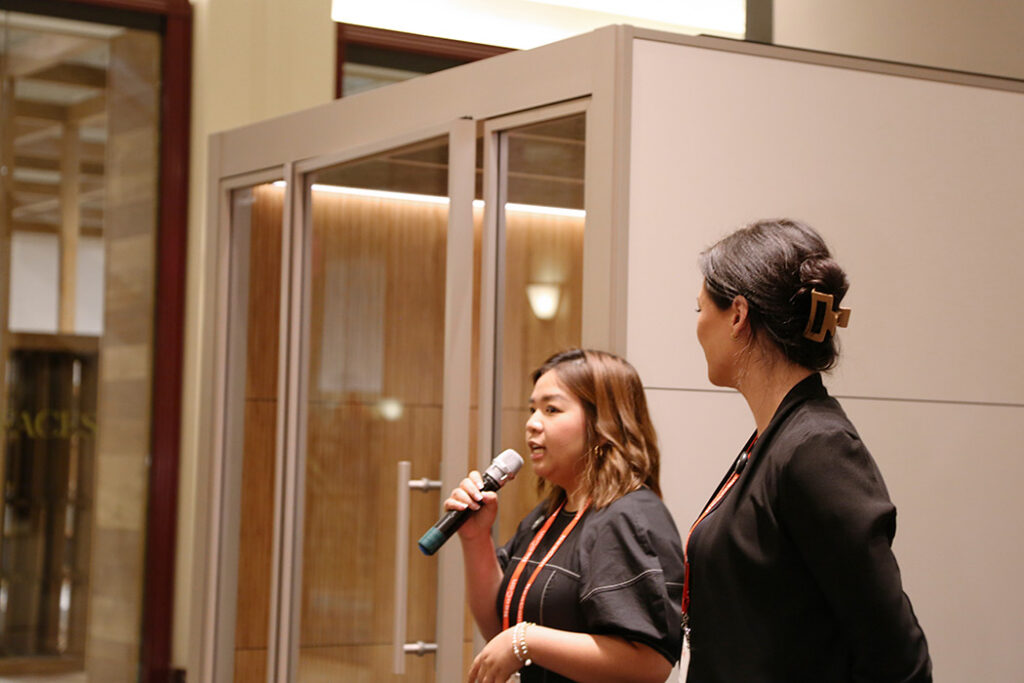
The pod debuted at NeoCon 2024. The response from industry professionals was significant, and notably different in texture from the response most pod designs get at a trade show. The standard reaction to a new pod is admiration of the engineering, the acoustic spec, the finish. The reaction to the Zen Garden Pod was something else. People stepped in and stayed inside it longer than they did in other pods on the show floor. They got quiet. They came out and they wanted to talk about it.
I have run the contest for several years now, and the Zen Garden Pod is the one I find myself thinking about when I am planning the next iteration. Gia’s design did not look like a pod. It changed what a pod could look like.
The portable lesson
The thing to take from this project is not aesthetic. It is conceptual. Privacy pods are not only productivity instruments. They are also restorative environments, and the practitioners who specify them as both will produce floor plans that hold occupants better than the floors that specify only one of the two.
The other thing to take from this project is about who gets to shape the category. Gia is a student. She is going to be a working designer in the field for the next forty years. The version of the pod brief she carries with her into those projects will be shaped by whether she got asked the right question early, and by whether the industry made room for the answer she brought back. The contest exists because I believe the category benefits from more of that voice, not less. The Zen Garden Pod is the proof.